

Build Your
Investment Thesis.
Tonight we get specific. The sharpest angels aren't the ones with the most capital — they're the ones with the clearest thesis. By the end of this session, you'll have the first draft of yours.
Tonight's Lineup
-
1Why We Built Sengo Our mission, and why this room exists
-
2What Is an Investment Thesis? And why every angel needs one
-
3Real Theses in the Wild How four firms turned conviction into capital
-
4The Five Pillars Framework The components every thesis needs
-
5How to Develop Yours A repeatable process, not a one-time exercise
-
6Activity: Thesis on a Napkin You leave tonight with a draft
-
7Group Discussion & Closing
Why We Built
Sengo.
Sengo (戦後) is the Japanese word for “postwar” — the era of renewal and rebuilding after WWII. It's a name about transformation, and about communities reconstructing what was taken from them.
Sengo is reimagining fundraising and investing through AI-powered education, community, and access.
A world where capital flows as freely as community — where every founder has the resources to build, every funder has transparent ways to invest, and every community can share in the wealth created. From exclusion to access. From extraction to ethics. From individual gain to collective wealth.
A Gap on
Both Sides.
There's a $14 trillion wealth gap in America — fed by exclusion on both sides of the table. A clear thesis is one of the most powerful tools an angel has to break that cycle deliberately.
Sources: McKinsey Global Private Markets Report 2025, KingsCrowd 2025 Annual Report, SEC DERA
What Is an
Investment Thesis?
Your thesis is a written, repeatable answer to three questions: Why this? Why you? Why now? It's the filter that turns inbound chaos into a deliberate portfolio.
1. It filters your deal flow
You say no faster. You say yes more confidently. You stop chasing every "interesting" deal that crosses your desk.
2. It builds your reputation
Founders know if you're a fit before they pitch. Co-investors know what to send you. Your name starts to mean something specific.
3. It drives your returns
Concentration in your edge beats spray-and-pray. Pattern recognition compounds when you see the same kinds of companies again and again.
In the Wild.
Four firms, four theses. Notice how specific they are — and how each one closes some doors so it can blow others wide open.
Backstage Capital
"We invest in companies led by underrepresented founders — women, people of color, and LGBTQ+ entrepreneurs." A thesis built entirely around founder identity, on the bet that overlooked talent is mispriced.
Harlem Capital
"To change the face of entrepreneurship by investing in 1,000 diverse founders over 20 years." A goal-anchored thesis — pre-seed and seed, sector-agnostic, with founder diversity as the through-line.
Precursor Ventures (Charles Hudson)
"Conviction over consensus, at the earliest stage." Pre-seed only, mission-driven founders, often before institutional VCs will touch the deal. The edge is being first.
Lowercarbon Capital
"Kicking carbon's ass." A single-sector thesis. Climate tech, full stop. Concentration as strategy.
The Five Pillars.
Synthesized from frameworks taught at ACA, Pipeline Angels, Hustle Fund, and 37 Angels. Every thesis answers all five.
Stage
Where do you enter? Pre-seed, seed, Series A. Earlier = more risk, more ownership, more time to exit.
Sector
What do you fund? Industries, themes, problem spaces. Specificity beats "I'm sector-agnostic."
Founder
Who do you back? Profile, values, geography, lived experience. This is often the heart of an angel thesis.
Check & Cadence
How much, how often? Check size, deals per year, reserves for follow-on. Math, not vibes.
Edge. Why should a founder take YOUR money over the next angel's? Network, expertise, lived experience, distribution, patience — what do you actually bring? If you can't answer this, you're a checkbook, not a partner.
How to Develop
Yours.
A thesis isn't something you invent. It's something you excavate — by paying attention to what you already do.
Step 1 — Audit your last 10
Last 10 founders you took a meeting with. What patterns? What stage, what sector, what kind of person? Your behavior is already revealing your thesis.
Step 2 — Map your unfair advantage
What do you know that most investors don't? What rooms can you walk into? Your edge usually lives in your last 10 years of work, not your portfolio.
Step 3 — Pick a lane (start narrow)
You can broaden later. Start with one pillar held tight: a sector, a founder type, OR a stage. Conviction beats coverage at this game.
Step 4 — Pressure-test it
Share your draft with 3 founders and 3 investors. Founders tell you if it's clear. Investors tell you if it's differentiated.
Step 5 — Write it down. Revisit quarterly.
A thesis you can't say in two sentences isn't a thesis — it's a wish list. And it should evolve as you learn from your portfolio.
Thesis on a
Napkin.
Fill in the blanks. Don't overthink. We'll share drafts at the end — messy is welcome.
I invest in stage startups building sector for customer, led by founders who profile. I write $ amount checks, # per year. My edge is your edge.
Why now? What about this moment makes this thesis the right one? • What does success look like in 5 years? Not the dollar return — the kind of portfolio you'd be proud to have built.
Group
Discussion.
What surprised you about your draft?
The pillar you couldn't fill in is usually the most interesting one. Where did you stall?
Which pillar was hardest to articulate?
Most new angels can name a sector but not their edge. Where did the language give out for you?
Whose thesis (in this room) do you want to hear more about?
Angel investing is a team sport. The best deals come through people whose thesis you understand — and who understand yours.
Disclaimer
Nothing presented tonight constitutes an offer to sell or a solicitation of an offer to buy any securities. No securities are being offered or sold at this event.
The frameworks and examples shared during this session are for educational purposes only and should not be construed as investment advice or a recommendation to buy or sell any security. Firm theses cited are paraphrased from publicly available materials.
All investment decisions are made at your own risk. You should consult with a qualified financial advisor, attorney, or accountant before making any investment decisions.
Thank You.
Tonight you started something most investors never bother to do: you put your thesis on paper. The angels who outperform aren't the ones with the most deals — they're the ones who can finish this sentence: “I invest in…”
We're back together May 28 to workshop the theses you drafted tonight — bring your napkin. Live founder pitches close out the night.
Founders in the room (or in your network): we're selecting 3 founders to pitch live at the May 28 session. Open to all stages, rolling review. Submission deadline: Wednesday, May 21. Link in the app and in this week's Substack.
The State of
Angel Investing.
Tonight we're zooming out. Q1 2026 just broke records — we'll unpack what actually happened, what it means for angel portfolios, and where the opportunity still lives.
Tonight's Lineup
-
1Q1 2026 By the Numbers The headline stats and what's new
-
2The AI Concentration Why four deals captured 63% of the quarter
-
3The Exit Window Reopens IPOs and M&A are back — what that means for angels
-
4The Squeeze & the Opportunity Dilution risk, mid-market shifts, and the picks-and-shovels play
-
5Where Angels Can Still Win Sectors and strategies that still make sense
-
6Group Discussion & Closing
A Record-Breaking
Quarter
Global startup funding in Q1 2026 didn't just grow — it re-shaped the landscape.
Source: Crunchbase Q1 2026 Global Funding Report
Four Deals,
63% of the Quarter
Capital isn't just flowing to AI — it's concentrating at the very top of the stack.
OpenAI — $122B raise
At a reported $852B valuation. The largest private capital raise on record.
Anthropic — $30B raise
At a $380B valuation, continuing frontier-lab concentration.
xAI — $20B • Waymo — $16B
Rounding out the four mega-rounds that absorbed the majority of Q1's capital.
For angels, these mega-deals are signal, not destination. You can't write a check into OpenAI. But the rotation tells you where institutional capital is heading — and where your portfolio companies might land follow-on rounds.
The Exit Window
Reopens
After a three-year drought, IPOs and M&A are back. This matters more to angels than you might think.
Sources: Crunchbase Billion-Dollar Exits Board, PitchBook
The Squeeze &
the Opportunity
The Dilution Risk
When founders raise at inflated institutional valuations, early angels can get compressed fast. A 15% ownership stake can drop toward 1% in a single round if the cap table resets.
The Picks-and-Shovels Play
Angels can't write $10M into quantum computing. But they can seed the teams building developer tools, observability platforms, data labeling, and compliance infrastructure for AI.
The Mid-Market Shift
Austin, Denver, Miami, and Nashville angel groups are outpacing coastal cities on a per-firm basis — often funding at $5M valuations where Sand Hill wants $8M.
Where Angels
Can Still Win
The underrepresented founders we back are often building in exactly these spaces — vertical, capital-efficient, and overlooked by mega-deal coverage.
Group
Discussion
How has your thesis shifted?
What are you investing in now that you wouldn't have 12 months ago — and what are you avoiding?
Are you playing adjacent to AI, or stepping back?
With 80% of dollars in one sector, how are you thinking about concentration vs. diversification in your personal portfolio?
How are you pricing entry?
With valuation inflation at the top, what does a “fair” angel-stage valuation look like in your deal flow right now?
Disclaimer
Nothing presented tonight constitutes an offer to sell or a solicitation of an offer to buy any securities. No securities are being offered or sold at this event.
The information shared during this session — including all market data, trends, and commentary — is for educational purposes only and should not be construed as investment advice or a recommendation to buy or sell any security.
All investment decisions are made at your own risk. Market data referenced is drawn from publicly available sources including Crunchbase and PitchBook as of April 2026. You should consult with a qualified financial advisor, attorney, or accountant before making any investment decisions.
Thank You.
Tonight was about reading the market together. The sharpest angels aren't the ones chasing headlines — they're the ones translating them into conviction.
Keep the conversation going in the app. Bring your questions — and your deal flow — to the next session. Updates will be sent via email (through Substack) — all other updates inside Sengo.
Sengo
Closing the Wealth Gap in Private Market Assets Through Evidence-Based Solutions
Presented by Ila Corcoran, Founder & CEO
Meet Ila Corcoran
Founder and CEO of Sengo, passionate about closing the wealth gap in private assets and democratizing access to capital for underrepresented founders.
Your turn! Let's hear from you. Share your background and what brings you to angel investing.
(We'll cap intros at ~10 minutes)
What We'll Cover
- Brief personal background & introduction of Ila Corcoran
- Optional sharing from attendees (10 minutes total)
- Initial vision and goals for this angel investor community
- Discussion on private markets and angel investing in 2025
- Data on funding gaps and investor returns
- Overview of the Sengo platform
- Preview of our live pitch event at end of month
- Q&A and community feedback
Let's build something great together.
Community Goals
- Create a supportive network of angel investors committed to founders
- Share knowledge, resources, and investment opportunities
- Build authentic relationships between funders and founders
- Democratize access to quality dealflow
- Learn together and grow as investors
Your feedback is welcome!
What These Meetings Look Like
Two Monthly Gatherings
Education Session
Once per month, we gather to discuss angel investing topics, hear from industry experts, and build knowledge together as a community.
Live Pitch Event
Once per month, we host a live founder pitch where you can ask questions, practice due diligence, and consider investment opportunities.
Build expertise, access dealflow, and invest alongside a supportive community.
Angel Investing 101: Getting Started
- What is an angel investor? An individual who provides capital to early-stage startups, typically in exchange for equity
- Typical check sizes: $1K-$50K per investment (start small and scale)
- Portfolio approach: Plan to invest in 10-20+ companies to manage risk
- Time horizon: 7-10 years on average for exits
- Due diligence: Evaluate team, market size, product-market fit, traction
- Legal basics: SAFEs, convertible notes, and priced rounds
Remember: Only invest what you can afford to lose.
Private Markets in 2025
- Private assets now exceed public assets by trillions — projected to reach $23T+ by 2027
- 49 million Americans eligible to invest in private companies, yet fewer than 2% actually do
- 5.5 million businesses start annually, but less than 3% access venture funding
- Growing demand for accessible, ethical, community-driven investment pathways
Discussion: How do we democratize access?
The $14 Trillion Wealth Gap
A Systematic Market Failure on Both Sides
For Founders: Despite representing 32% of the U.S. population and founding nearly half of all new businesses, Black and Latino founders receive only 4% of venture capital, while women-founded companies secured just 1-2.3% of VC funding in 2024.
For Investors: 49 million Americans are eligible to invest in private companies, yet fewer than 2% do — locked out of the fastest-growing asset class.
This dual exclusion creates a $14 trillion wealth gap and leaves billions in unrealized economic value on the table.
Sources: HBCU.VC (2025), Founders Forum Group (2025), Inc. Magazine (2024), Preqin (2023)
Black Founders: Q2 2025
of total U.S. venture funding went to Black founders in Q2 2025
Source: HBCU.VC Q2 2025 Black Venture Funding Report
Women Founders: 2024
Sources: Inc. Magazine (2024), Founders Forum Group (2025), PitchBook Data
Latino Founders: 2021-2024
Sources: WebSummit (Dr. Paul Judge), Crunchbase (2024), KingsCrowd (2025)
The Cost of Bias: Returns Investors Are Missing
Black & Latino unicorns: $24B raised → $125B valuation (5.2x return)
Sources: First Round Capital (2015), BCG (2018), Kauffman Foundation (2013), Harlem Capital (2024)
Systemic Barriers in Venture Capital
Who Makes the Decisions?
82.7% of decision-makers at U.S. VC firms with $50M+ AUM are male, while 17.3% are women.
Only 2% of VCs are Latino/Latina at the partner level.
This homogeneity creates structural barriers through:
- Pattern matching and affinity bias in investment decisions
- Closed networks limiting diverse founder access to capital
- Unconscious bias in due diligence and valuation processes
Sources: Founders Forum Group (2025), Carta Equity Report (2024)
What is Sengo?
Building infrastructure for private market access.
- Education: Modular learning that prepares founders and funders to confidently navigate private markets
- Community: Digital hub where members discover, vote on, and invest in community-backed opportunities
- Tech-Enabled Advisory: Hands-on support for founders raising capital
- Events & Experiences: Culture x Capital events blending community, education, and dealflow
We had our launch party in March 2025 and since then...
$5M+ raised by founders at a 167X multiplier
9,400+ email subscribers • Featured in Forbes, NerdWallet, Nasdaq, Business Insider
Using the Platform
- Access modular education that builds confidence navigating private market investments
- Join a digital community to discover, vote on, and discuss investment opportunities
- Review curated dealflow from vetted founders building impactful businesses
- Check out our events — from Fashion x Futures pop-ups to pitch sessions
- Connect with aligned investors for co-investment and learning
Meet Cee Cee's Closet
End of the month - Live founder pitch!
Join us to hear from a founder building an impactful business with >$8.5M in lifetime sales. This is your chance to see our dealflow process in action.
A creator-driven brand with strong social media presence and proven traction
Join the movement to democratize access to capital
Questions? Ideas? Ready to get started?
Visit app.bysengo.com to enroll as an investor
Thank you for being here. Let's change the game together.
References & Data Sources
HBCU.VC — Q2 2025 Black Venture Funding Report
Founders Forum Group — Women in VC & Startup Funding: Statistics & Trends (2025)
Inc. Magazine — Women-Led Companies Attracted Just 1% of VC Funding in 2024
First Round Capital — 10 Year Project: Female Founders Perform 63% Better
BCG & MassChallenge — Why Women-Owned Startups Are a Better Bet (2018)
Kauffman Foundation — Women-Led Teams Show 35% Higher ROI (2013)
Harlem Capital — 1,338 Black & Latino Startups That Raised $1M+
Carta — Annual Equity Report 2024
Preqin — Private Markets Projected to Exceed $23 Trillion by 2027
Welcome Back.
Tonight we're going beyond the pitch deck. We'll explore how to conduct due diligence — the process of evaluating a company once it has your attention.
Tonight's Lineup
-
1Welcome & Recap Quick look at what we've covered so far
-
2What Is Due Diligence? From pitch to deeper evaluation
-
3The DD Framework Five areas every angel should explore
-
4Understanding Term Sheets Economics vs. control — from Venture Deals
-
5Deal Structures & Key Terms SAFEs, convertible notes, and what to watch for
-
6Red Flags & Green Flags Patterns that signal strength or risk
-
7Group Discussion & Closing
Our Journey
So Far
Session 1 — The Landscape
Why alternative investments matter and where angel investing fits in a portfolio.
Session 2 — The Power Law
How venture returns work, why most deals fail, and why one winner can define a portfolio.
Session 3 — Evaluating Live
Pitch best practices, investor question frameworks, and our first live founder pitch.
What Is
Due Diligence?
Due diligence is the structured process of evaluating a company after a pitch catches your interest. It's how you move from curiosity to conviction — or walk away informed.
The pitch tells you the founder's story. Due diligence helps you verify it, pressure-test assumptions, and understand the risks you'd be taking on.
Five Areas
to Explore
Valuation, round structure, cap table, investor rights — the terms of your actual entry point. We'll dig into this next.
The Term Sheet:
Two Things Matter
According to Venture Deals, every term in a deal ultimately comes down to two concepts:
Valuation — pre-money vs. post-money
Liquidation preference — who gets paid first in an exit
Pro-rata rights — your right to maintain ownership %
Board seats — who governs the company
Protective provisions — investor veto rights
Anti-dilution — protection if valuation drops
As an angel, you likely won't negotiate control terms — but you need to understand them. Know what you're signing and how it affects your outcome.
How Early-Stage
Deals Work
SAFE (Simple Agreement for Future Equity)
The most common angel instrument today. You invest now, receive equity later when a priced round happens. Key terms: valuation cap and discount rate. No interest, no maturity date.
Convertible Note
A loan that converts to equity at the next priced round. Similar to a SAFE but with interest and a maturity date — which can create pressure if the company hasn't raised by then.
Priced Round (Series Seed / A)
A formal equity sale with a set valuation, share price, and full term sheet. More common at later stages. As Feld & Mendelson note: this is where economics and control terms are fully negotiated.
“The best deals are ones where both sides feel like they got a fair outcome.” Understand valuation caps, discounts, and preferences — they determine your actual return.
Red Flags &
Green Flags
Paying customers or strong LOIs
Clear, honest answer to “what's not working”
Reasonable valuation with rationale
No clear customer validation
Unwillingness to discuss risks
Valuation disconnected from traction
Red flags don't always mean “don't invest.” They mean “dig deeper.” Context matters — early-stage companies won't have all the answers yet.
Disclaimer
Nothing presented tonight constitutes an offer to sell or a solicitation of an offer to buy any securities. No securities are being offered or sold at this event.
The information shared during this session is for educational purposes only and should not be construed as investment advice, financial advice, or a recommendation to buy or sell any security or investment product.
All investment decisions are made at your own risk. You should consult with a qualified financial advisor, attorney, or accountant before making any investment decisions.
Thank You.
Tonight was about building the muscle for what comes after the pitch. Keep practicing these frameworks.
Continue the conversation in the app. Share what frameworks resonate with you, and bring questions to the next session. Updates will be sent via email (through Substack) — all other updates inside Sengo.
Welcome Back.
Tonight we're hearing a live founder pitch and sharpening the skills every angel needs — how to evaluate, ask the right questions, and give feedback that matters.
Tonight's Lineup
-
1Welcome & Community Updates
-
2Pitch Best Practices
-
3PsyFlo Pitch
-
4Closing
Reimagining Fundraising
& Investing
Sengo is closing the wealth gap in private assets by helping companies prepare to scale and helping funders learn how to invest in them.
Supportive Network
Create a community of angel investors committed to backing founders authentically.
Share Knowledge & Dealflow
Share resources, investment opportunities, and democratize access to quality dealflow.
Build Relationships
Build authentic relationships between funders and founders — and learn together as we grow as investors.
Pitch Best
Practices
A few reminders before tonight's session. This should take 2–3 minutes.
Purpose of the Session
Tonight is about learning together and evaluating opportunities. The goal is to sharpen how we assess companies as a community, ask better questions, and build our frameworks.
No Soliciting
Please don't pitch your own venture tonight or ask for fundraising intros for your company. We want to respect PsyFlo's time and keep the focus on one opportunity at a time.
Curiosity Over Judgment
Early-stage companies are messy by nature. Ask questions with the goal of understanding the business, not trying to “catch” the founder.
Ground
Rules
Confidentiality
What founders share in this room is meant for investor evaluation, not public distribution. Please don't repost slides or financial details outside the group.
This Is Not Investment Advice
Everyone makes their own investment decisions. The discussion is meant to help everyone build their own framework for evaluating deals.
Leave Room for Others
Try to keep questions concise. If you have deep follow-ups, we can continue after the session.
Focus on Investor
Questions
Helpful investor questions usually fall into a few categories:
Personal advice, product suggestions, or consulting feedback. Keep the lens on investor evaluation.
Disclaimer
Nothing presented tonight constitutes an offer to sell or a solicitation of an offer to buy any securities. No securities are being offered or sold at this event.
The information shared during this session is for educational purposes only and should not be construed as investment advice, financial advice, or a recommendation to buy or sell any security or investment product.
All investment decisions are made at your own risk. You should consult with a qualified financial advisor, attorney, or accountant before making any investment decisions.
Thank You.
Great session tonight. Let's keep the momentum going.
Connect with other members, share deal flow, and keep the conversation going between meet-ups in the app. Next session is 3/26. Comms will be sent out via email (through Substack) but all other updates will be inside Sengo.
Welcome Back.
Tonight we're going deeper — institutional capital, deal selection, and the questions every angel investor should be asking.
Tonight's Lineup
-
1Welcome & Community Updates 5:00 — Kick-off and what's new in the Sengo community
-
2Fireside with Amiah Sheppard 5:10 — Institutional capital, deal selection, and lessons from Backstage Capital
-
3Open Discussion & Announcements 5:45 — Community Q&A and upcoming opportunities
-
4Wrap 6:00 — Closing remarks and next steps
Next Meet-Up:
March 10
5:00 PM ET — Founder Pitch Session
A tech platform bringing AI-powered mental health tools into schools, backed by Cornell Tech and NYU. This will be our first live founder pitch — a chance for our community to hear directly from the team, ask questions, and practice evaluating a real deal.
Cornell Tech Backed NYU Backed EdTech × Mental HealthThe Power Law
of Venture
In venture capital, a small number of investments generate the vast majority of returns. This is why funds invest in many deals — not just one.
This is why diversification matters — even the best investors can't predict which deal will break out.
Sources: Peter Thiel, Zero to One; Sebastian Mallaby, The Power Law: Venture Capital and the Making of the New Future; Correlation Ventures; Cambridge Associates; Kauffman Foundation
Meet Amiah
Sheppard
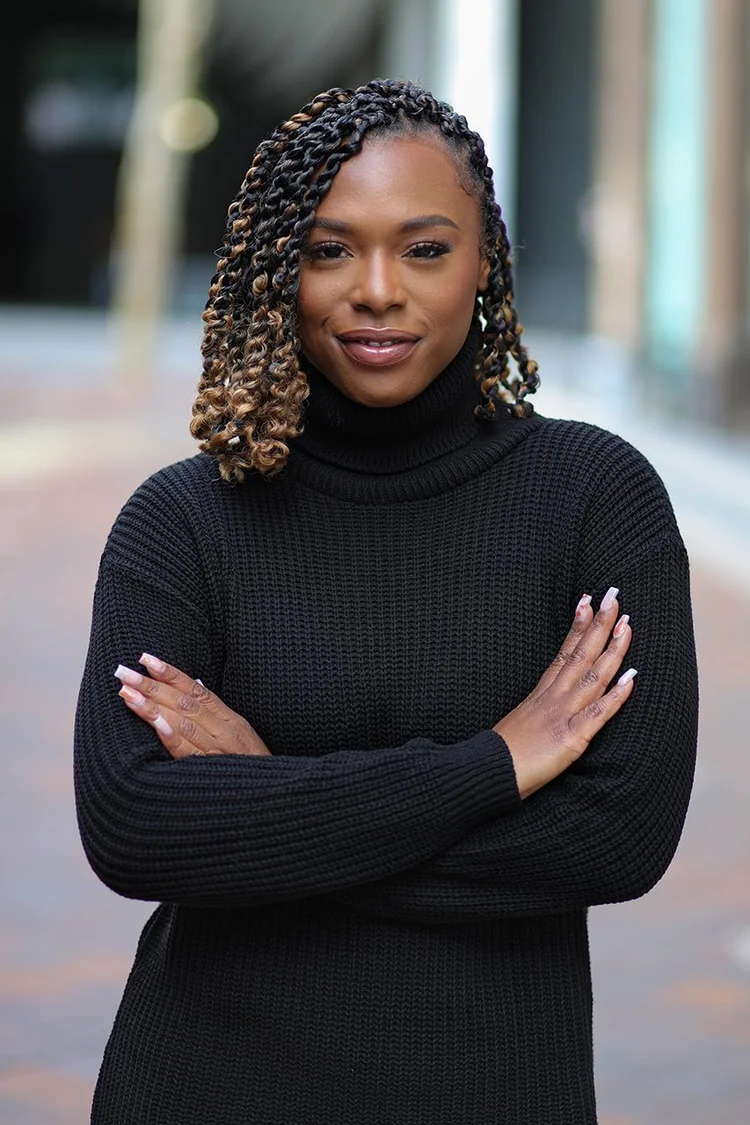

Amiah brings deep experience from the institutional side of venture. At Backstage Capital — a fund started by Arlan Hamilton with LPs like Mark Cuban — she reviewed nearly 2,000 startups. Tonight she'll share how institutional investors evaluate deals, and what angel investors can learn from that process.
Backstage Capital Alum Institutional & AngelWhat We'll
Explore
Institutional vs. Angel Capital
How do institutional investors source and evaluate deals differently from angels — and where do the two worlds overlap?
Deal Selection Framework
From 1,900 startups reviewed to 24 selected — what signals matter most when picking which founders to back?
Building Your Own Process
Practical takeaways for developing your personal deal evaluation criteria and building conviction as an angel investor.
Thank You.
The community keeps growing. Let's keep building together.
Connect with other members, share deal flow, and keep the conversation going between meet-ups in the app. Next sessions are 3/10 and 3/26. Comms will be sent out via email (through Substack) but all other updates will be inside Sengo.
Welcome to
the Table.
A casual conversation about angel investing, alternative assets, and building a community of informed investors.
What We'll Cover
-
1Introductions Meet the organizer + what inspired this group
-
2Member Roundtable Share about yourself, your career, and what drew you to angel investing
-
3Alternative Investing Landscape How alternatives fit into your portfolio — insights from Morgan Stanley & other firms
Hi, I'm Ila.
I made my first angel investment in 2024. I also started Sengo and we have deployed over $31,000 in grants to founders who have gone on to raise $5M.



Why Alternative
Investments?
Portfolio Diversification
Alternatives — including angel investments, private equity, and venture capital — have low correlation with public markets, helping reduce portfolio volatility.
Higher Return Potential
Private markets have historically outperformed public equities over long time horizons, with top-quartile VC funds returning 2–3x net of fees.
Growing Accessibility
Regulatory changes and new platforms are making it easier than ever for accredited and non-accredited investors to participate in private markets.
Sources: Morgan Stanley Investment Management, KKR Global Institute, Cambridge Associates
The Alternative
Investing Boom
Sources: Preqin, Morgan Stanley, Angel Capital Association, PitchBook
Where Angel Investing
Fits In
Angel investing is one slice of the alternatives pie. Here's how leading firms suggest thinking about allocation:
Core Portfolio (70–80%)
Public equities, bonds, index funds — the foundation of your wealth.
Alternative Allocation (10–20%)
Real estate, private equity, venture capital, and hedge funds for diversification and upside.
Angel & Seed Investing (1–5%)
High-risk, high-reward. Invest what you can afford to lose. Build a portfolio of 10–20+ deals over time.
Source: Morgan Stanley Wealth Management, Vanguard Research
Later This
Month
Amiah is a member of our meet-up group with deep experience on the institutional capital side. She previously worked at Backstage Capital, a fund started by Arlan Hamilton with notable LPs like Mark Cuban. Amiah brings a unique lens as an LP, angel investor, and founder coach.
Backstage Capital Alum Institutional & AngelThank You.
Welcome to the table. Let's build something together.
Connect with other members, share deal flow, and keep the conversation going between meet-ups. More sessions, speakers, and resources coming soon.